Thursday, 18 June 2015

Fuel economy, and the factors affecting it

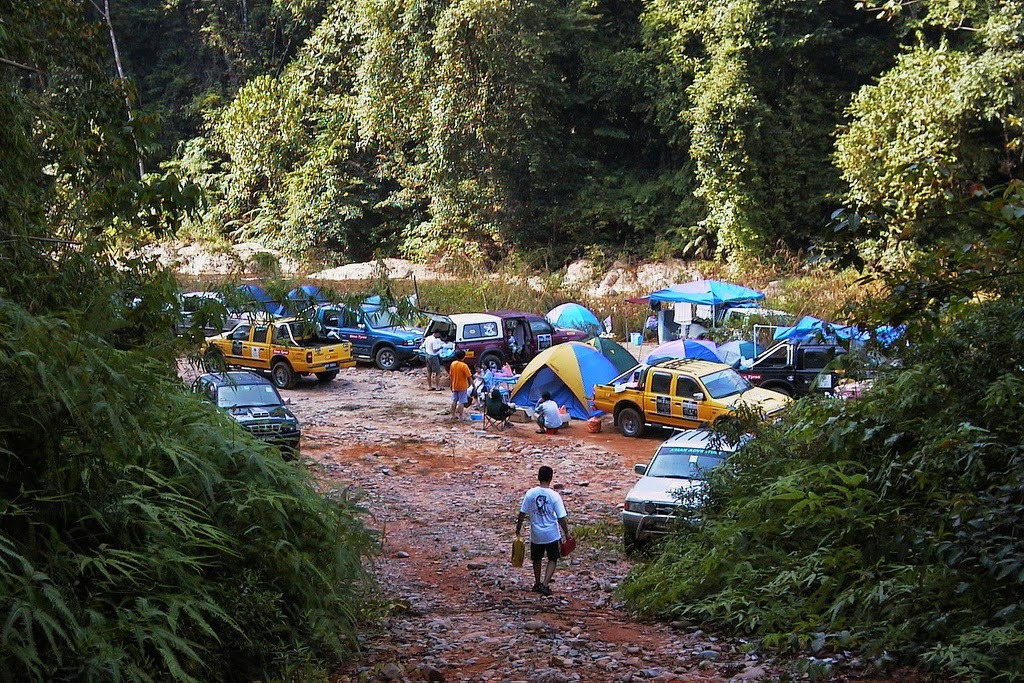
7.1l/100km is a pretty good fuel economy figure for a five-cylinder 3.2l diesel that can produce 200bhp and 470Nm, like this Ford Ranger XLT.


Yes, it is a matter of growing concern. Fuel is expensive, and the Ringgit is deteriorating.
So, here’s the low down on what affects fuel consumption and how you, as the driver, can adjust your driving style to maximise efficiency.

Modern car engines are mostly run by computers which interpret what the driver wants from his/her inputs at the throttle. These inputs are translated into precisely measured quantities of fuel injected into the engine’s combustion at the right time. Many cars also have computers controlling the gearboxes, in sync with the engines, to further optimise fuel efficiency.

If you have a newish vehicle of a particular make, model and specifications, and achieves fuel economy that is drastically from another person who has the same type of vehicle and it is of similar age, that difference can be attributed to different driving conditions, such as ratio of urban driving to highway driving.

You may, for example, be getting poor economy because you drive a lot in congested city streets while he travels mostly between cities and towns, using mainly the highways. Stop-start motoring wastes more fuel than constant cruising in top gear.

But, before getting into the nitty-gritty of good or bad fuel economy, it's worthwhile to consider how consumption is measured. A common unit used today is litres per hundred kilometres, expressed as the amount of fuel used to travel 100km. Other popular units include km per litre and the old Imperial miles per gallon. I advocate going metric, for reasons of simplicity.

A car counts the kilometres it has travelled by a sensor that measures the number of rotations of a part of the car's drivetrain, that co-relates to the number of times its wheels have turned. This is where it becomes tricky to determine if you have really travelled 100km even when the odometer says you have.

Most new cars have meters that over-read a little, i.e., it may indicate you are going 100km/h when the reality is that you are doing 97km/h. There is a good reason for this - you cannot blame the car maker if you get penalised for speeding. By the time you get zapped at 119km/h, there is no way you can argue that the car's speedometer was showing 110km/h. It was more likely to be showing 124km/h, or something like that.

This optimistic reading does not matter if you keep your car standard and measure fuel consumption under one set of circumstances against another. But it becomes a problem once you change tyres to a different size than the original. If your new tyres are of a bigger diameter, the odometer will show a lower reading for the same distance travelled.

For example, if your odometer showed 200km for a journey from a fixed point near KL to another fixed point in Ipoh, then the odometer may show 194km after the same journey with tyres that are 3% bigger in diameter. This has to be taken into account when calculating fuel consumption. And if you rely on the car's computer, remember that the car does not know that you now have bigger tyres. (It is possible to get the meters re-calibrated but that's another story.)

Heavy Vs Light foot
If you and your housemate work the same hours in the same building downtown and hang out together after hours, and still record widely differing fuel economy with the same type of car - in short, all things being equal - then it is highly likely that driving style is causing the difference.

It takes a lot of energy to accelerate a stationary vehicle from standstill, and a lot more to keep accelerating to a higher speed. It takes a lot less to maintain the vehicle at a moderate constant speed, and then a lot more is need again to maintain it at high speeds, when wind resistance increases.

You burn a lot of fuel to build up speed, converting chemical energy into heat and then into kinetic energy. When you brake to slow down you, turn that kinetic energy into heat again, with the brakes being the parts that gets hot. That energy then gets dissipated into the atmosphere.

So, in city traffic, if you stomp on the accelerator to get up to 50km/h and then stomp on the brakes to come to a screeching halt again, you will have burnt a lot of fuel to heat the air and move just a short distance. Like from one set of traffic lights to the next.

Or you could press just enough on the accelerator to move about half the distance, and lift off the pedal. Let the car coast (other traffic permitting, of course) to the next red light. This way, you burn just enough fuel to get you going, and let momentum or knietic energy carry you along. Friction and air resistance will act to slow you down. If your judgement and timing is spot on, you will need just a gentle press on the brakes just as your car is almost at a standstill anyway, just to avoid hitting the car in front.

In such a scenario, a heavy-footed driver and a calculative light-footed driver will travel the same distance in more or less the same time, but one will use a lot less fuel, all other factors being equal. Plus, one will wear out his brake pads a lot sooner.

There are many variables in city traffic, such as intersections, right of way, congestion, etc, all of which conspire against a smooth, constant drive, which is the sure way to achieve the best fuel economy. But an alert driver who thinks things through can still use fuel more efficiently than one who does not.

Mind the brakes
Even when traffic is flowing smoothly, the ability to read the traffic ahead can aid in fuel efficiency. If the brake lights come on six or seven cars ahead, for example, a careful driver who maintains a safe distance between himself and the car in front may not need to brake but only lifts off his right foot and coasts for a while as he assesses the situation. If it develops into an emergency, he brakes. If it does not, and that driver up ahead braked for a reason that no longer exists or no reason at all, he resumes driving normally.

Each time you brake, you are wasting energy gained from burning fuel, i.e., wasting fuel. So, by keeping a safe distance between yourself and traffic in front and constantly scanning conditions far ahead, you can leave the brakes alone until you really need them. You save on fuel, and over time, also on brake replacement parts.

Needless to say (but I'll say it anyway), tailgating is bad for fuel economy. You will have to brake every time the car in front slows down for whatever reason.

Having said that, do use the brakes when necessary. No point taking fuel economy to extremes and crashing the car. Common sense and all that, ya?  

Unnecessary overtaking is another way to waste fuel. If you are in a long line of cars on a single-lane trunk road, downshifting gears and stomping on the gas pedal may be necessary to achieve an overtaking manoeuvre, burning copious amounts of fuel to build up speed, then slamming on the brakes to slow down and merge back into the long line as an oncoming lorry whizzes by.

You will have wasted a lot of fuel and heated up your brakes, frighten a few other motorists and your passengers and yourself, and be exactly one car farther ahead in the same long line of cars.

Hit the open road, and you will get better mileage, but ... Yes, there is always a but.

Speed
There is a speed at which fuel efficiency is at its optimum for a particular vehicle. It is the slowest speed at which you can drive comfortably (for the engine, not the driver) in the tallest gear.

This optimum speed is determined by the torque characteristics of the car’s engines and its gear ratios (itself a combination of the main gearbox, the final drive and, in the case of 4X4s, the transfer case ratio).

Learn to read power and torque charts like this, also for the Ford Ranger 3,2l. Choosing the right gear to keep the engine revs between 1,500 and around 2,800 rpm yields the best combination of performance and fuel economy.
For many vehicles, this happens to be between 70 and 90km/h. Go any slower, and the torque may not be enough to push the car along in top gear. When you go faster, wind resistance or drag increases in proportion to the square of the increase in speed. Meaning, if you double the speed, drag rises four times. Pick any speed as a baseline, go 10% faster, drag increases 21%, 20% faster, 44% more drag, etc.

At the risk of sounding repetitive, remember a lot of the fuel that is burnt is the energy needed to overcome the greatly increased drag at increasing speeds. Driving at 140km/h requires a lot more revs and fuel to overcome four times more wind resistance compared to cruising at 70km/h.

Driving style, as in fast & furious (FF) versus cool, calm, collected (CCC), also has a big impact. For maximum efficiency, read the traffic just like you would in congested areas, ease off when you see vehicles braking ahead, when you see a road hog on the overtaking lane who does not give way to others, etc. If you charge right up behind a recalcitrant road hog, then have to brake hard and wait until he moves over, then accelerate hard again, fuel is going to be wasted.

The alternative is to study the situation and plan ahead, lift off the gas to slow down gently, find a way past, then resume cruising at the speed you want to travel. Smoothness is the key.

A good friend and I once travelled from KL to Penang, each of us driving identical new VW Golf GTIs of the same age, and we both refuelled to the brim at the R&R (rest area) at Tapah. Upon reaching Batu Ferringhi, I had more than two-thirds of a tankful left, he had low fuel warning light blinking.

There is no question about YS Khong’s driving ability or credentials, having been the Malaysian rally champion five times. He does enjoy speed, though. Seeing as I also neared the car’s speed limit and cruised at ... ahem, above legal limits, for most of the journey, the difference between his consumption and mine was mainly in aggressiveness.

Weight 
It takes more energy to accelerate a heavy car than a light one. It takes more fuel to accelerate a double cab pick-up with a full load of passengers and maximum payload than it does to accelerate that same vehicle with just a driver aboard. And each time the vehicles slow down, the built-up energy is wasted, and more fuel needs to be burnt to build up speed again.

Theoretically, an unladen vehicle and a heavily loaded version of the same make and model would return similar consumption if both could start rolling together and then travel, say 500 kilometres at a constant speed of 90km/h. The heavy vehicle would incur a fuel penalty only when accelerating from standstill to 90km/h, after which both will need the same energy to overcome the same level of wind resistance. Overall consumption figures will see only a tiny difference favouring the lighter car.

This is all well and good in theory, but in real life, the heavier car will be thirstier than the lighter car because cycles of acceleration and deceleration are very much a part of getting around.

A slippery slope
From walking and running, we know that climbing hills take more effort than cruising on flat ground. In theory, though, the extra energy you put into gaining altitude becomes potential energy which should be recoverable when you descend the other side of the hill. After all, you don't climb up forever, and what goes up must come down.

In reality, that does not always happen. If the slopes are gentle, it is possible to offset the extra fuel need to climb up by coasting down the other side. But, if the slopes are steep, you may need to burn a lot of fuel while climbing, and descend slowly with some braking to ensure a safe descent so some energy will be lost.

DO NOT ever put your gearbox in neutral when coasting, whether you are driving an auto or manual. It is silly and dangerous. Silly because it does not save any fuel, and dangerous because it can result in loss of control and a crash..

All modern cars rely on electronic fuel injection, which cuts off fuel when you don't press on the accelerator pedal. When coasting down a gentle in slope in top gear, it is the car's momentum that keeps the engine turning so whether it is running at 2,000rpm or 3,000rpm, no fuel is burnt. Many modern cars have multi-information displays that show, among other things, instantaneous fuel consumption. Select this and you will see that fuel burn is 0 l/100km when you coast in gear, with right foot off the pedal.

However, if you put the gear in neutral, the ECU (engine control unit) actually needs to inject fuel to keep the engine turning over at idling speed. Idling does not use up much fuel but even a small amount is still more wasteful than none at all.

On top of being wasteful, coasting downhill in neutral is dangerous because you no longer have the benefit of engine braking, and no means of propulsion if you suddenly encounter a situation that requires power to get around or away from. Engine braking is the practice of selecting a lower gear than usual when descending a slope so that the car's momentum or kinetic energy is used to turn the engine over, working against the compression in the cylinders, resulting in a retardation of speed.

Tyres are another factor that has a bearing on fuel economy. Some tyres are especially engineered to give low rolling resistance, possibly with compromises in other aspects of performance. Chances are that changing to other tyres on the basis of aggressive looks, or bigger sizes for more macho style, will hurt fuel economy. There’s a price for looking good, beyond the sticker price of the tyres, and other sacrifices in noise, grip, comfort, etc.

Tyre pressures also influence economy, with higher tyres generally giving better mileage at the expense of comfort. Refer to the vehicle manufacturer’s guidelines on pressures. If a range of pressures is given, know that the lower figures usually give a softer, more comfortable ride while the higher figures give better fuel economy. Choose wisely.

There are no rigid guidelines on when an engine is at its most efficient, with some schools of thought insisting a brand new engine is still tight and rough before it is truly run-in, when the working, moving components have polished themselves by rubbing against each other. Some say engines are nicely bedded in at 10,000km, others say 30,000 or 40,000, while some engines begin to get tired at 100,000km or even sooner.

What is not disputed is that a well-serviced and maintained engine will run more efficiently than one that is neglected. Service regularly, use the best quality lubricants and filters recommended by the engine maker, and fuel consumption should remain at optimum levels.

Friday, 5 June 2015

Rise of the Padawan Challenge


The fame of Padawan, as in Jedi-wannabe, may have spread far and wide, even to galaxies far far away but that of Padawan, the district in Sarawak, maybe not so much.

Not so well known it may be but the charms are aplenty here, with friendly inhabitants and picturesque landscapes making it a popular destination for visitors who make it to Kuching.

Padawan encompasses about 1,430 square kilometres south of Kuching city with a population of 300,000, comprising mainly Bidayuh and Chinese, along with Malay and Iban.

Efforts to realise its tourism potential were cranked up a notch recently with the inaugural Padawan International 4X4 Challenge, which attracted a total of 60 teams from as far away as Sabah, Johor, Brunei and Indonesia.

The high-octane contest of men and machines against nature was the highlight of this year’s Padawan Fest, an annual affair which is already known locally for its colourful tapestry of culture, food, music and traditional sports such as rafting and even a triathlon.

For local 4X4 aficionados, the Padawan Challenge was a much needed boost to their favourite sport, which has been lagging in development behind regional neighbours.

Despite the state’s size and rugged terrain favouring the widespread use of robust go-anywhere, all-wheel-drive vehicles, Sarawak has not had a high-profile event to rival Sabah’s 25-year-old Borneo Safari, the Peninsula’s world-class Rainforest Challenge or the numerous big-name events in Kalimantan, or even Brunei.

Although drivers and vehicles from Sarawak have enjoyed success at the highest levels in these neighbouring events, the absence of a comparable local event has been glaringly obvious.

The Padawan Municipal Council picked up the gauntlet early in the year and, with enthusiastic support from the various local 4X4 clubs, things are finally looking up.

Excitement was further heightened by news that some of the superstars of 4X4, including the much-celebrated Borneo Safari 2014 champions “Lozai” Lo Fui Min and “Chuxi” Chang Chiew Shew”, would be going head-to-head with the local heroes.

It would not be just a onlookers’ spectacle either, with three categories created so that there would be plenty of action for any 4X4 fan to test themselves against, according to their own level of experience and appetite for pain.

Just as eagerly anticipated was the arrival of the out-of-state vehicles. Fans of 4X4s are never content with a factory-built car since each person’s ride is expected to reflect his own (and his wallet’s) touch so it was to be a welcome opportunity to see and touch the best works from the Sabahans, Indonesians and Bruneian builders.

Class A was the premier no-holds-barred event, featuring the top drivers in fully souped-up vehicles while Class B was for more moderately modified cars and Class C was a clubman-like event for anyone in a standard four-door, long-wheelbase 4X4s.

The action commenced under a blistering sun, and the crowd was not disappointed. There were thrills and spills aplenty as the less polished crews made amateurish mistakes, such as not engaging their four-wheel-drive or forgetting to start the stopwatch, and were punished for them with disqualification, broken parts and even overturned vehicles.

It became apparent quite early on that the celebrity drivers were a cut above the ordinary, with the Lozai-Chuxi pairing scoring two consecutive wins in the first two special stages (SS). Their brilliant run continued with a second, then another win, a second and a third, and then two more wins, to build an apparently unassailable lead from five clear wins out of eight stages, without a single penalty.

The task of defending hometown honour rested on local hopefuls Jong Jack Koh and Jong “Ah Tee” Ai Loong, who had both tasted successes in competitions abroad, who stayed within reach, just, with a solitary stage win and several top three finishes.

It was by no means a two-horse race, with other contenders such as Sarawak’s Wilfred Sim and Indonesian co-driver Sortono, the second Sabahan pair of Ye Yong Chung-Chin Sei Yeung, and Kuching’s Then Tze Kim-Chai Kuek Leung all in contention for a podium finish.    

With a single SS left to run and a large margin, Lozai and Chuxi seemed a sure bet until the unthinkable happened - they failed to complete the stage, recorded as a “Did Not Finish” or DNF. With that, they could do no more than hope those coming after them would also fail to finish.

On the one hand, several other teams also scored DNFs despite giving their all. On the other, a window of opportunity, however slender, appeared for the trailing pack who had yet to take the last torture test.

With all the makings of a classic cliffhanger, the sun was setting and time was running out as two teams left counted their chances and knew they had nothing to lose and everything to gain by going for broke.

Then and Chai gave the local crowd reason to cheer when they become the first pair to complete the dreaded gully run, but the best they could hope for was a third place.

The two Jongs were up next, with two non-negotiable tasks to accomplish - they must finish the course before the allotted time ran out, and they must do it without incurring penalties - if they were to fulfil the hopes of the tense home crowd.

One can only imagine the pressure on the Jongs as they weighed the difficulty of the task at hand against the outside chance of upsetting the pre-race favourites, and doing it in front of their fans and friends.

Jack Koh and Ah Tee rose to the occasion, made their run with intelligent decisions and, crucially, without making any expensive mistakes. And the crowd roared!

At the sporting level, it was a great success with the local heroes claiming purses of RM10,000 and RM3,000 for their victory and third place, respectively, in the elite category while the much-celebrated favourites were consoled with a respectable second place and RM5,000.

The honours reflected the international flavour of the Padawan Challenge, with the Indonesian pair of Cicing-Hendrian Lim topping Group B, and victory in Group C claimed by the Bruneian pair of Au Fook Hwa-Vance Lee Khin Pek.
 
While there had been some shortcomings early on, organising chairman and Padawan councillor Wilfred Yap said, all was well that ended well.

“We are confident the success of the Padawan Challenge will be a boost to 4X4 activities in Sarawak, and we can look forward to more support from the state government and tourism authorities,” he told the cheering crowd.

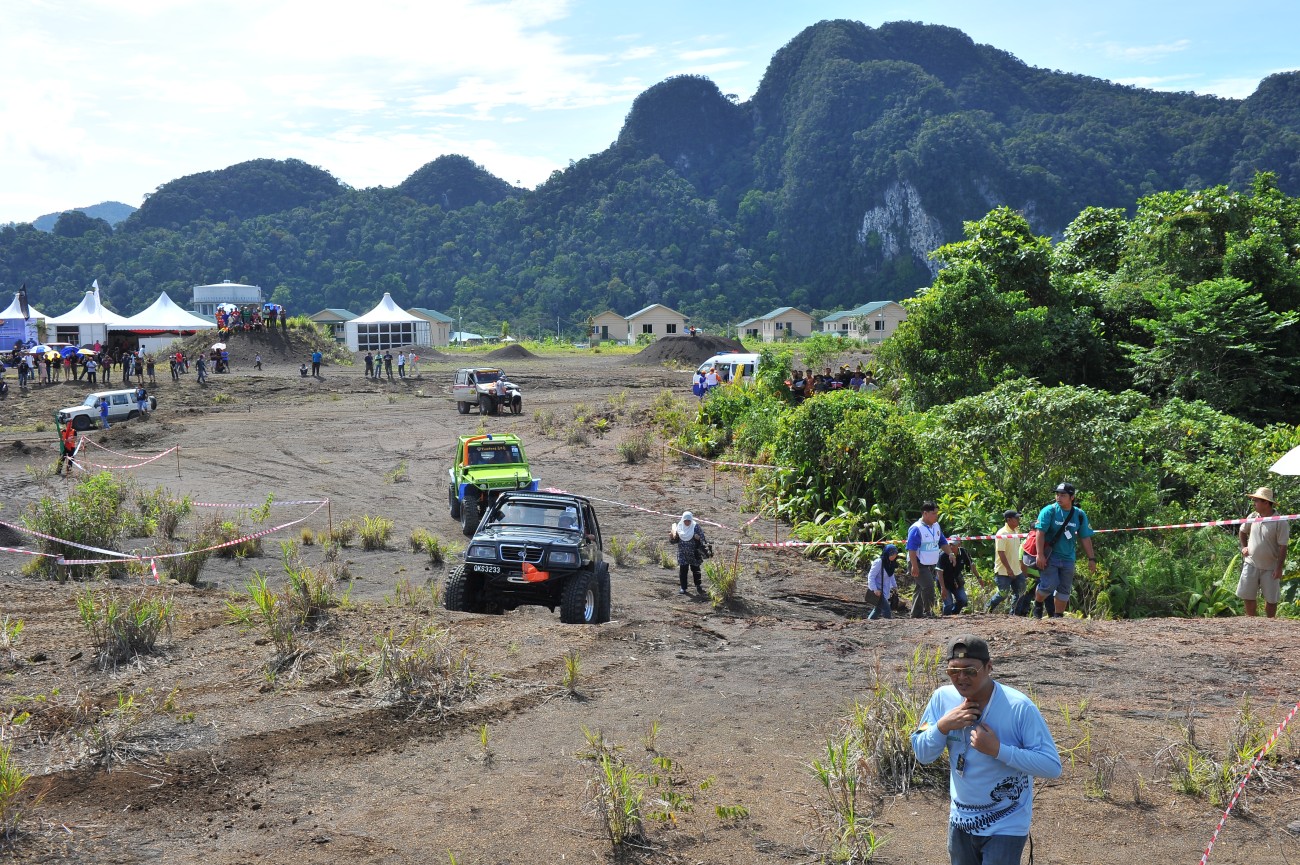
With the area’s majestic limestone hills as a backdrop, the challenge venue at the Bengoh Resettlement Scheme, some 35km south-west of Kuching, was an immediate hit with the competitors and supporters, as well as the estimated 12,000 visitors to Padawan over the two days.

Before the event, few people had been to this new village, which was built to accommodate the residents of several nearby areas who had to be relocated because the building of the Bengoh dam flooded their homes.

Now, there is new hope that Padawan will establish Sarawak firmly on the region’s 4X4 map.


Wednesday, 11 February 2015

Memories of Lanun Darats past ...


I feel sad. Not because of anything bad, but because of so many good memories, so it is a good kind of sad. 
Nearly 17 years have elapsed since I first became a part of the Ford 4X4 Adventure Team, more popularly known as "Lanun Darat" (that would be "Land Pirates" when translated from Bahasa Malaysia into English).
Along the way, I have made many friends, many of whom are still my closest buddies to this day. I have learned much about 4X4s, how to operate them, how to look after them, and how to enjoy them. 
Over those years, I have been on more than 30 expeditions with the Lanun Darat family, including several offshoots in Cambodia, and I have been privileged to have led the latest one in Kota Kinabalu, Sabah, on 7-8 February, 2015.
It was a resounding success (even if I do say so myself), judging by the participants' happy faces after a day of light offroading in scenic Kiulu and Tamparuli before gathering on beautiful Dalit beach for a gorgeous sunset BBQ dinner and a great night's rest at the luxurious Shangri-La Rasa Ria Resort. 
And followed by more 4X4 action the next day at the sight of the Borneo Safari 2014 Prologue Special Stages in nearby Sepangar.
But, amidst all the happy moments, a tinge of sadness because this was to be the last Lanun Darat. Ever. No more.
Representatives from Ford's Malaysian distributor, Sime Darby Auto Connexion, made the announcement just before the flag-off. There would be other events for customers in future, they said, such as Ford's Driving Skills For Life, but no more Lanun Darat. 
Times have changed, and certainly much has changed in the automotive industry in the years since 1999. 
The future will come soon enough, and it is not my intention to do any crystal ball gazing. Instead, I want to look back at the wonderful times I had over the years, and share some of the hundreds of photos documenting those happy Lanun Darat moments.


Sunday, 18 January 2015

To The Rescue


It's January, 2015, and it is wet out there. Really, really wet. Cats and dogs don't do it justice, throw in the goldfish, too. It's been raining non-stop for more than 24 hours, and on and off for several days before that.
Still, the flooding and misery is nothing like on the scale that our Peninsular compatriots have had to endure in recent weeks.
The river levels are rising, there is standing water on roads everywhere, and many areas have reported flooding.
The local 4X4 community have been on alert for a while in case our services are needed, and the call went out today. 
Kampung Simpok, a predominantly Bidayuh village in the Padawan area, between the Kuching-Serian Road and the road to Borneo Heights, was being inundated and some residents needed help with evacuation.
Three cars from Sakta (the Sarawak Travel and Adventure Association) answered the call. Cikgu Bhil, Meek Mapes and myself did what we could to ferry residents from low-lying areas to the evacuation centre at Kg Simpok's community hall.
There were several other vehicles and volunteers from the Sarawak Amateyr Radio Emergency Service (SARES) and Civil Defence (Jabatan Pertahanan Awam, JPAM) on hand to assist the villagers.
In places, the water was too deep even for 4X4s so the two boats JPAM brought along had to be pressed into service.

Saturday, 3 January 2015

Prepare now for the next big one


Serious flooding is not a new phenomenon in Malaysia. In fact, it is an annual event, occurring at more or less the same time of the year, varying only in the location, the degree of severity and extent of damage.
Hopefully, the worst is over as I write this, and the recovery and clean-up efforts can proceed.
Putting aside why our country does not seem prepared for this disaster despite its regular nature, what can we learn to better prepare for the future?
Many things are needed when the waters rise, and among the first is information. Detailed and accurate information. Which areas, which roads, which stretches of which roads are low-lying? How low, relative to some standard point?
The marks left by the receding waters show clearly just how high the floodwaters were in many places. Now is the time to gather data and prepare detailed elevation maps.
When the next floods hit (and they will, as surely as December follows November), the authorities should be able to tell quickly which towns and villages and roads are threatened.
If the water reaches 1 metre in a particular spot in Kuantan, for example, they should know approximately how high the floodwaters are at various areas in the state of Pahang, which areas are inundated, which roads are passable to which categories of vehicles.
Wouldn't it be nice to have a colour-coded map, update hourly, showing clearly which roads and kampungs are green, or yellow, or red zones?

This blog is primarily about my passion for 4X4 vehicles and activities so it should come as no surprise that they come into the picture.
It has become clear, thanks to numerous photos and videos posted on social video, that 4X4 vehicles have been crucial in delivering much-needed aid to areas that are otherwise inaccessible.

There has been no shortage of goodwill and good deeds from all segments of Malaysian society in responding to calls for help. Donations in cash and kind have poured in, an there is no shortage either of lorries and even containers to transport them to distribution centres in affected areas.
But hundreds, maybe even thousands, of lighter vehicles are still needed to get the goods to where are needed most.

This is where the privately owned 4X4 vehicles have stepped forward. From seasoned 4WD enthusiasts and veterans to newbies who just purchased a double cabin pick-up recently, they all responded magnificently, organising themselves through Whatsapp and Facebook.
They raised money, collected donated goods, loaded up their trucks and headed off. Many who had little or no experience in offroad driving placed their faith in their travelling companions, some of whom were complete strangers until recently, to help show them the ropes.

Bravo to you all. Even if the floods this time were so bad at their peak that even 4X4s could not get through, the water was bound to subside within a couple of days to a level that the relief missions could proceed.
For the future, the authorities should encourage the formation of 4X4 clubs and activities, and also close ties between them and the agencies that are likely to be in the frontlines when battling future disasters, agencies like Bomba, JPAM (Civil Defence), RELA, JPJ and the Police.
When the alarm is raised the next time, someone in charge should know that they can call on the Mitsubishi Triton Club, the Toyota Hilux Club, the Ford Ranger Club, the Land Rover Club, etc, and which areas to assign them to.
There are many of these groups out there, most of which are formed casually for members to discuss subjects common to their favourite marques, their next "teh tarik" or TT gathering or offroad trip.
With some initiative from the authorities, it should not be too difficult to link up with them.
When there are no disasters, that would be the best time to plan and prepare, to organise training sessions to help them become more familiar with the capabilities and limitations of their vehicles and themselves. As the old wisdom goes, one should not wait until the tummy aches to start building a toilet.

It is heartening to note that several government departments have gone to the ground or "turun padang" to assist even though disaster relief is not their function. Departments like Jabatan Pengangkutan Jalan (JPJ) have earned praise on their Facebook page for using their 4X4 vehicles to help distribute food and other aid goods in areas that lesser cars cannot get to. Let me add my praise and compliments here. Syabas, JPJ!

That said, let's build on it. The authorities should recognise that, in our hour of need, there are many privately owned vehicles out there that are much better prepared and equipped for the arduous task than their own, which are largely as stock standard as the day they were delivered.
Enthusiasts who spend their own time and money to pursue offroading as a hobby also end up having more capable vehicles - better tyres, winches, snorkels, etc, when the need arises. Many also have more experience in driving through water, thanks to their leisure adventures.
Ironically, many of these improvements may be illegal in the eyes of the JPJ, perhaps because the rules have not been updated to reflect changing technology.


For example, JPJ's guidelines on tyres says "Pemasangan tayar yang lebih besar sehingga mengubah ketinggian keseluruhan kenderaan adalah tidak dibenarkan." (Fitting of bigger tyres that change the overall vehicle height is not permitted).
This could and should be amended to spell out a specific amount of extra height that is permitted, "up to 50mm", for example.
Bearing in mind the usefulness of 4X4 vehicles in helping victims of disasters, the JPJ could hold talks with the 4X4 community to discuss what constitutes permissible, safe and useful upgrades to 4X4s instead of just banning any and everything.
Perhaps, to prevent abuse, there could be some kind of "technical permission for specific modifications" in writing granted to specific vehicles that have signed up as volunteers for future disasters, either as a club member or at an individual level.
The good news is, Malaysia potentially has a huge fleet of tens of thousands of 4X4 vehicles, available and ready for action at a moment's notice, all paid for and maintained by private individuals at zero cost to the Government.
Even if not all are willing or able to come out and help, tapping into just a percentage of this pool of volunteer auxiliaries will be a big burden taken off the authorities.
All that needs to be done now, before disaster strikes again, is to put in place some kind of plan to coordinate these privateers when the need arises.
I hope the lessons of the past week are not quickly forgotten. When the rains start again, there won't be much time to get things done.

Sunday, 28 December 2014

Friends In Need


Of late, the official as well as social media have been flooded with images of severe floods throughout large portions of Peninsular Malaysia. Sabah has also been hit, albeit to a lesser extent.
It is heartening to note that the 4X4 fraternity have been among the first to help. It is common knowledge that many 4WD vehicles, being engineered for operation in rugged terrain, have an advantage in coping with floodwaters, compared with ordinary saloon cars.
A typical 4X4 is taller by design because this gives better ground clearance, a useful trait when traversing uneven ground. Of course, there are also occasions when the 4X4 may have to ford shallow streams in going about its business.
There are, of course, the videos and photos from the Camel Trophy years back in the 1980s and 90s, showing Land Rovers soldiering on gamely with their drivers sitting in chest-deep water.
So, it is easy to believe, as many people do, that 4X4 vehicles can go anywhere, any time.
I hate to dent this image because I really like it (the image) but the reality is, they do have limitations, and it is important to know these limits. It could be a matter of life and death.
A typical 4X4 off the showroom floor has an advantage of a few inches, maybe 50mm to 100mm, over the typical family car. An upgraded expedition vehicle, a la Borneo Safari special, may have another 10 inches (254mm) or so of extra clearance, thanks to lifted suspension, oversized tyres, snorkel (or raised air intake) and better waterproofing of some components.
But, before plunging literally into the deep end of real-world floodwaters, it is worth considering that many of the places now afflicted by the year-end deluge are under many METRES of water. Entire houses have been submerged.
Roads that are normally clearly marked and visible are now completely hidden under a shroud of murky water, with strong currents thrown in for good measure. There is no distinguishing the roads from the drains alongside, or other potential submerged hazards. There's no telling whether the roads are even still there, or have been partially or wholly swept away.
I am not telling any owner of a 4X4 to not go and help. Far from it, I am applauding those who are in a position to assist the less fortunate, and are willing to go and help.
What I am urging is for everyone to exercise caution. A 4X4, however well prepared and upgraded, is still not a boat but an air-breathing machine that needs to keep its wheels on solid ground.
"Be careful" is what I am saying. Don't venture alone to areas that you are not familiar with, go in a group that can help one another, preferably with locals to guide the way.
As you drive along dry tarmac and come upon a flooded stretch, you'd need to know how deep the deepest part of that stretch is. It usually starts off shallow because you are on high ground that is sloping downwards.
From the few centimetres of water initially, it progressively gets deeper. The deepest part may be half a metre, or a metre or three metres. It would be a bad idea to find out it's the latter when you are deep in it. Turning back may be difficult to impossible.
If you are eager to answer the call to help, make sure you and your vehicle are well prepared.
You should be familiar with your vehicle and how to operate all of its systems. If you don't know how to put it into 4H or don't know the difference between 4H and 4L, it is not a good idea to start learning when there is water lapping your bonnet.
At the very least, travel with someone you know for sure is experienced in driving in difficult conditions, and learn as much as you can before you get to the flooded areas.
Bear in mind that deep water is not the only hazard in the flooded areas. Constant and heavy rain can also cause landslides and roads can collapse with little warning. Even the trained professionals are not spared.
From the photos and videos circulating on social media, it is evident that life is not going on as normal. Petrol stations have been submerged so make sure you carry a sufficient supply of extra fuel for your vehicle.
Top up your tank and any extra jerry cans you have BEFORE you get to the flooded areas. Fuel is likely to be in short supply because all the locals will also be desperate to obtain fuel from a reduced number of outlets. You are there to help, not become a burden by needing rescue yourself.
Ensure you have an ample supply of extra food, drinking water and warm clothing for yourself and other volunteers in your car. The usual checklist of must-bring items for a week-long camping trip might be a good idea.
You cannot count on the usual standards of hospitality in a disaster area and, again, you do not want to become a burden on already scarce resources.
Communications are essential, and the usual cellular network may not be functioning in some areas. It is best to have long-range two-way radios. Whether VHF, UHF or HF, these may be the only way to contact the outside world once you are there. Prior preparation is essential, find out who can be reached on which frequencies.
It is not my intention, nor am I qualified, to write a manual on operating a 4X4 in flood relief missions, just sharing a few concerns and thoughts that came to mind.
Sarawak is not, fortunately, affected by floods that are any way as severe as those in other parts of the country so my buddies and I are not urgently needed. Hopefully, if the alarm is raised, we will be ready to answer the call.
Take care and stay safe.

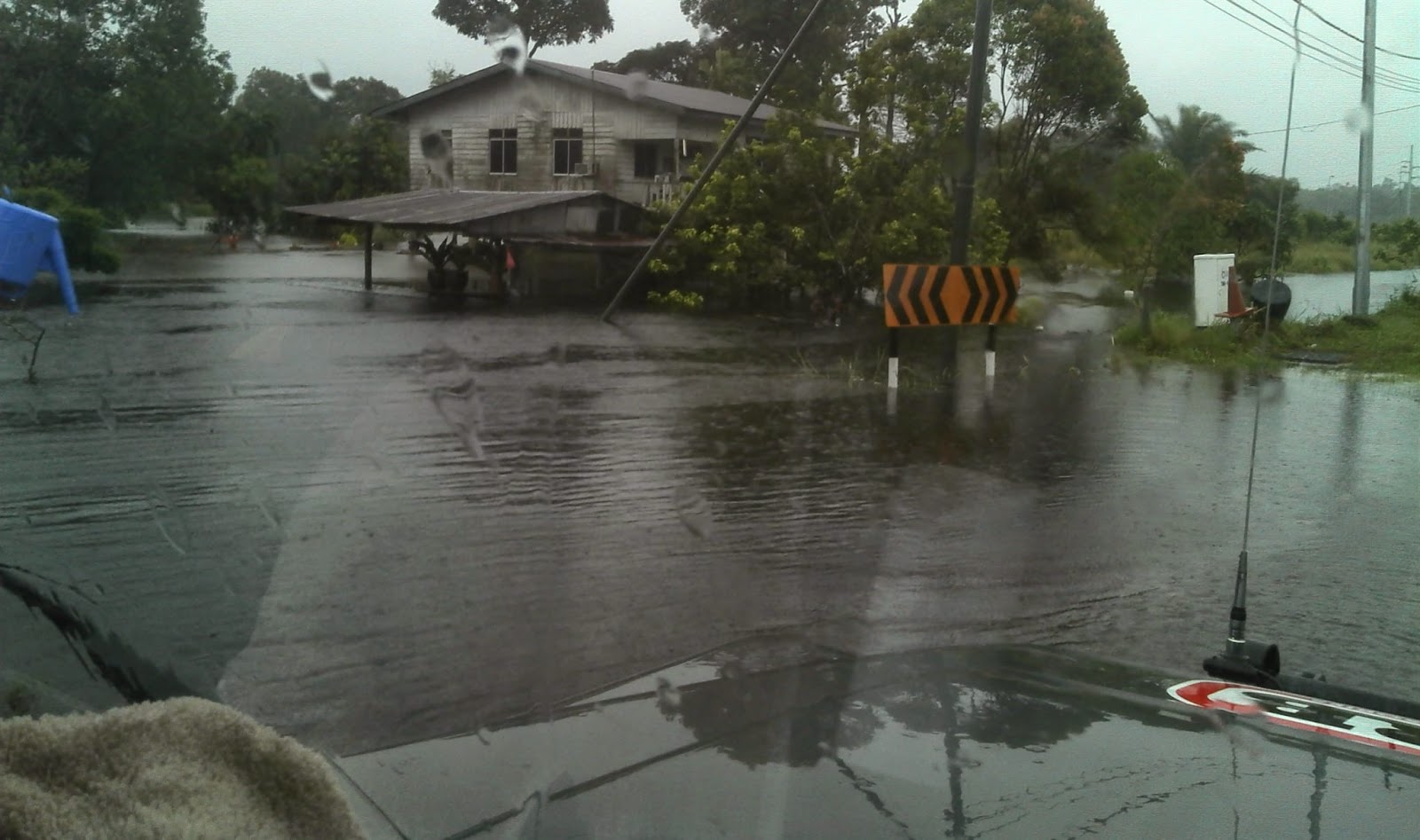
That road you are familiar with, that you've driven on hundreds of times, may no longer be there, at least not in the shape you knew it, when it is submerged by floodwaters. - Pic by The Star Online.


Monday, 1 December 2014

Goodbye, Pak Nadjib, my friend


Fatkhun Nadjib AS 12.03.1964 - 29.11.2014


Update - A timely and well-deserved tribute to Pak Nadjib 04.12.2014

The measure of a friendship is not time. It is not how long you have been acquainted, nor is it how much time you have spent together. It is quality.
I have not known Fatkhun Nadjib for long, nor have we spent that much time together. We first met at the Jeruton Hotel in Brunei around the third week of October, 2012.
I had just driven solo from my hometown of Kuching, Sarawak, on my way to Kota Kinabalu, Sabah, for the Borneo Safari, and Nadjib was a member of the GT Radial-sponsored team from Jakarta, Indonesia, headed the same way for the same purpose.
There were about a dozen of them, all from a club called, quite appropriately, Everything Four Wheel Drive (EFWD), so I had a tough time remembering their names and faces after the initial round of introductions, what with my failing short-term memory and all that.
The 'Everything Four Wheel Drive'
 decals that I display with pride.
Aside from team leader Susanto Harimuljo, soon to be known by all and sundry as simply "Santo", the other person whom I got to know right away was Pak Nadjib.
As that was the first time I had gotten to know Indonesians up close and personally, I called everyone Pak, realising only later that I was actually older ... errrm, more senior ... than most of them.
Pak Nadjib was instantly memorable not only because of his distinctive long and curly mane of grey hair and unforgettable craggy face, but because of his warmth, his friendly and unassuming personality.
Even though I struggled to understand their Bahasa Indonesia, I felt that he and I became friends right away. Over the next two weeks, under the arduous conditions of the Borneo Safari, I would also establish firm friendships with the rest of the EFWD gang.
I felt ashamed that, after 50 years and having travelled over much of the world, I had not gotten to know my next-door neighbours better. They are the finest bunch of mates a bloke could wish to have alongside when the going got tough, as they did in Borneo Safari 2012 (and indeed, any Borneo Safari in any year).
Among this group of confidence-inspiring bunch of off-roaders, Pak Nadjib stood out as the cool guy, totally unshakeable and imperturbable, always smiling and not only willing but eager to lend a hand to any and all in need.
Nothing seemed to upset or shock him, not mishaps or vehicle breakdowns, or bad weather, or, as is common in 4X4 adventures, when "shit happens".
Part of what defined Nadjib's character that year was his choice of ride, a venerable Toyota Land Cruiser FJ40 that dated from the 1970s. "Bangor" had a three-speed gearbox and was powered by the original six-cylinder petrol-fueled F-series engine, unlike many of the ther highly modified vehicles on the start line.
Over the eight days that we tackled the rugged terrain of Sabah's interior, I always felt comforted when Pak Nadjib and Bangor were just in front of me, or in my rear view mirror.
He was the kind of person that exuded a calm confidence that convinced all around him that all was good, "no worries, everything will be just fine", no matter how rough the going was right then.
He had a lot more mechanical issues with his old car than I had with my then-brand new Land Rover Defender. Many a time, I stopped because he pulled over with some issue or other, and just observed as he and his co-driver, his son Ramadhan Dede, just got on with the repairs. In no time, we would be on our way again.
During one stretch when we spent a lot of time waiting in the beautiful meadows of Kota Belud for our turn to make progress, Pak Nadjib seemed to be spending an inordinate amount of time talking on a satellite phone.
He looked tired and when I asked if everything was okay, he just smiled and said that his wife had undergone an operation and was recuperating in hospital. He and his son were in Sabah so there was not much they could do, and that was that.
For me, Borneo Safari remains a happy memory not only because of the great 4X4 adventures we encountered along the way, and the awesome scenery, but also the many new friends I made along the way, especially the Indonesians and, in particular, Pak Nadjib, Santo, super mechanic Ero "the Hero" Kebo Ireng, Pak Herman and Pak Budhi.
Our journey together did not end with the closing dinner in Kota Kinabalu, for the Indonesians of EFWD had not only secured the Longest Journey Travelled To Get To The Start award (having set out on a ferry from Jakarta and overland via Pontianak, Tebedu, Serian, Sibu, Bintulu, Brunei, Limbang and Lawas) but also had the longest drive ahead just to get home.
I accompanied them on part of that journey until Kuching, where they spent a night as guests at my home, before we said goodbye and they headed off for the Sarawak-Indonesia border at Tebedu-Entikong.
I never saw Pak Nadjib again. I will never see him again.
The following year, I caught up with several of the EFWD guys at Borneo Safari 2013, including Santo, Ero, Paks Herman and Budhi, but Pak Nadjib was not with them. He had other plans.
This year, again, I journeyed with the regulars through another Borneo Safari and, again, Pak Nadjib was not able to join them.
We did stay in touch through Facebook, and I was able to follow some of his further adventures, as he did mine.
Every now and then, he would ask when I was going to come visit him and the other 4X4 enthusiasts in Jakarta.
"Soon," I'd reply each time.
This year, Santo again invited me to come visit and I resolved to make the trip in early 2015. I looked forward to meeting up with all my friends there, including Pak Nadjib.
That is one resolution I will now not be able to fulfill.
On the night of Nov 29, 2104, Pak Nadjib was killed by a speeding motorist. He was just 50.
This sequence of shots from a video
 show the last moments before
Nadjib was cruelly struck down.
His last moments were spent doing what I will always associate with the kind of man he was - trying to rescue another motorist trapped in his wrecked vehicle after an accident.
According to the facts that have emerged since, Pak Nadjib had been with his family on their way from Bandung heading towards Jakarta when they came across the scene of an accident.
The driver of a minibus that had been involved was still trapped in the mangled cabin.
Pak Nadjib did what I have seen him done many times before, park his car safely in front of the distressed vehicle and set about helping the victim.
A video taken by Ramadhan showed that Pak Nadjib was conscious of the danger he was in, and checked a couple times to ensure that the situation was safe before getting back to the rescue work at hand.
What he could not foresee was that a reckless motorist would drive by so fast and so near the site.
In an instance, a good friend to many, a good man, a good husband and a good father, was lost.
There are no words to describe the loss.
In the grand scheme of things, I have not known Pak Nadjib a long time, nor did I spend a whole lot of time with him. But in those fleeting moments we did share, doing the things we both loved, he and I became friends. Good friends.
On Facebook, there has been an outpouring of grief and tributes from many people who have known Nadjib, who have regarded him as a teacher and mentor in 4X4. They are not only from throughout Indonesia but also from Sabah, Brunei and Sarawak, everywhere he had been and touched those who have known him.
Goodbye and rest in peace, my friend Fatkhun Nadjib.
My heartfelt condolence to his family.


(L to R) Pak Nadjib, Ramadhan and Santo in happier times.


Sunday, 16 November 2014

Earth, Winch & Fire (and Water) - The Elements of Borneo Safari 2014


ALL the elements came together to make Borneo Safari 2014 a classic. It did not start off that way, although veterans might argue that a slow, disorganised, chaotic (and, dare we say ... BORING?) start is also part of Borneo Safari's many cherished traditions.
After some bold venue and format changes in the past couple of years, the flag-off returned to the Sabah Tourism Board building in Kota Kinabalu's Gaya Street. It was bustling and crowded, which emphasised and amplified the scale of this year's record participation of 270 vehicles in Sabah's, and indeed, Borneo's, premier 4X4 event.
A couple of years ago, the entry list neared 200 (or was it just over 200?) cars, which led to some mutterings about traffic jams in the jungle despite the magnificent scenery of the route and overall praise from participants, and the 240 or so last year also raised concerns about whether the Safari was getting too big, too popular, and a victim of its own success. Well, it certainly seems to be getting more popular with each passing year.
After being duly flagged off by Sabah Tourism Minister Datuk Seri Panglima Masidi Manjun and other dignitaries, the convoy departed the state capital for nearby Sepanggar Bay, where the first competitive special stages (SS) were to be held.

A Slow Start
With so many cars to get safely into the jungle and the first night's camp site near Kota Belud, there was no time for dallying so most participants did not get to witness the action. This was another departure from the Borneo Safari of old, which was centred on the competition.
Thanks to the modern wizardry of Facebook and Whatsapp, the actual Safari participants followed the competitive action through photo and video updates posted by others and shared instantly around the world.
Anyone with a connected phone
could see more of the Borneo
Safari action than the participants.
So, "did you know the Sandakan car rolled on SS2?" was answered with "ya bah, my friend Whatsapped the pictures".
Anyone anywhere, as long as they have a smart phone (and who does not have one these days) can follow the action almost in real time, except actual Borneo Safari participants who have headed into the remote interior, out of phone signal range.
GPS tracks had been used to guide the participants since a couple of years ago, with limited success, and the failures continued this year. With an overly complicated arrangement that require following detailed, counter-intuitive instructions, it was not long before calls of "help, we're lost" started going out. And this was not even six hours into the event.
Then, the first real problem cropped up. A mild-mannered stream that we had to cross had been swollen into a raging, impassable torrent by heavy rain upstream. Many cars had to turn back and new plans had to be hastily made.
After a detour, original hard-core track and designated camp site of Plan A had to be abandoned. The various groups had to improvise and find whatever makeshift campsite they could for the night, hopefully before it got dark.
This was not a source for complaints, though, because it is accepted that in the Borneo Safari, Man can plan all he wants, but Nature has the final say.
Even though it was disappointing at the time, the decision to backtrack would turn to be a wise one a couple days later, with the most dramatic proof that high water could be one hell of a challenge.
If Day One had gone according to plan, everyone would have their craving for 4X4 action satiated already before emerging near the town of Kota Belud to face a 380-kilometre drive on tarmac up north to Pitas and then down south to Kota Marudu and on to Telupid, near the centre of Sabah.
But without the original track and campsite, it meant two days and over 480km (including 100km on the first day) of driving, there was still no sign of mud, and no opportunity to engage even 4 High, much less 4 Low!
The briefing for the media group on the morning of Day 3 brought no joy. "No off-roading today," media chief Hilary Francis announced. Some groaned silently while others were not so silent.
After refuelling and following directions for some 15 kilometres, a left turn brought some hope. It was a dirt track. Not quite what everyone had been preparing a whole year for, but at least it was not tar-sealed.

Ini Kali Lah!
Then, a stream crossing. A proper, Sabah-style fording under the brilliant sun, no less.
Then, it began. Hard Core! A mud hole, as deep as one dared hope for, full of gloriously brilliant orange mud.
The inaccurate briefing had caught many people off guard, wearing sandals and slippers which were totally inappropriate for the serious work ahead so there was a frantic rush to change into the proper footwear and attire. Nobody complained about the misinformation, they were simply to excited and not a little intimidated by the rough terrain ahead.
It begins!
This, finally, was the Borneo Safari we had come for, that we had looked forward to all year. For the first-timers, this was beginning to look like the stories they had been hearing about from previous editions. "Ini kali lah!"
Thus, began the low-gear crawls, the optimistic charges, the shouts and the frantic gestures. Out came the gloves and the winch cables, and the snatch blocks.
One by one, the cars went into the thick gooey mud and the drivers tried their best to bulldoze through to the other side, only to be foiled and had to be dragged out with varying degrees of difficulty.
Occasionally, someone like Brunei's Shamsuddin Zai would succeed in powering his way through to resounding applause and cheers. But the monster ruts he created in the process ensured that such success was few and far in between.  
Shamsuddin "Nissan King" Zai powers through ...

Be Careful What You Wish For
We certainly got our wish. The rest of the the day was spent slowly and painfully negotiating the multiple obstacles that lay ahead. More mud holes, steep and slippery ascents and descents, all the essential ingredients of a classic Borneo Safari were served up, one after another.
It was not long before the tough going took its toll on the vehicles, with mechanical failures occuring at the very first mudhole.
A broken driveshaft here, a shattered pinion gear there, an entire axle ripped off, a tyre puncture halfway up a treacherous slope, burnt-out winches or broken ropes or cables, all these more were occurring at a furious pace up and down the convoy.
In the afternoon, it poured. What was already a difficult track became a Herculean challenge.
It was teamwork that got each car through, slowly, painfully, an inch at a time, then a foot.

High Water
By late afternoon, the various groups had become mixed up and the convoy stretched over many kilometres.
The lead element of the media group, comprising four vehicles, reached the biggest of several streams in the Tawai area about 3.20pm and forded the clear waters without drama.
When the main body arrived less than half an hour later, the water level had risen considerably and it was beginning to look dangerous.
Media chief Hilary had misgivings about making the crossing but information from some participants bathing in the stream indicated it might be safe to attempt.
It would prove to be a mistake, as the strong current pushed his Trooper off-course in mid-stream, and a desperate and urgent rescue effort had to be mounted, with no time to waste. (See separate story)
Fortunately, everyone aboard was saved and all ended well, other than the 15-hour soaking that the car had to endure before the raging waters subsided sufficiently for a salvage operation to be carried out.


Earth and Fire
Not everyone had the same level of adrenalin and drama. One group missed the junction and ended up wandering on tarmac for another long day, and then spent an even longer day waiting for the others to catch up with them.
Then, just as they were about to have some fun, a Nissan Patrol from Brunei was brought to a screeching halt by a wheel bearing failure.
Mahmood "Komando Hangus" Omar and his charred car.
Mahmood Omar had to rely on a buddy to drive him over five hours to Tawau to look for a replacement part, and endured another five hours back to his stranded car, only to discover it had caught fire while he was gone. A wiring fault and subsequent short circuit was the suspected culprit.
There was not much else left for Mahmood to do except accept a tow from his buddy but his tales of woe were not over. The towing vehicle's tyres threw up rocks that shattered his windscreen.
But all these have not damped the enthusiasm of Mahmood, now dubbed "Komando Hangus" (burnt commando) by his friends. He has vowed to return for Borneo Safari 2015, better prepared than ever.

Imbak Canyon
The official destination for Borneo Safari 2014 was Imbak Canyon,  a forest conservation area famous for its wide waterfall. Sadly, most participants never got to see this spectacular wonder of nature. Only a handful of official and media vehicles were allowed into the conservation headquarters area because of space constraints so we will have to be content with their offical photo of what we missed.


Here Be Elephants
The rest of the convoy moved on to the oddly named Camp Hitachi (because it is identified by some abandoned Hitachi brand machinery, apparently) for a two-night stay.
A pair of exhausted competitors from Sarawak pulled over at the side of the track for a brief rest and promptly fell asleep.
When co-driver Tze Kim woke up, he nudged his partner Jack Then and asked: "Are there elephants in Sabah?"
His drowsy buddy wondered why he would come up such an odd question, whereupon Kim replied: "Because there is one looking at us."

Earth + Water = Mud
Jack Jones from Kuching enjoying the mud.
The journey from Camp Hitachi back out to Lahad Datu and civilisation would prove to be everything that 4X4 aficionados could wish for, and then some.
Winching, more winching, more mechanical failures, tyre punctures, flat batteries, and more. Much more.
Some of the bigger vehicles that had attracted admiration at the start line were now beginning to inspire dread rather than awe because their weight was proving to be a severe impediment to progress.
While the lighter vehicles could winch themselves through the quagmires, the massive beasts, some of them crippled by broken drivetrains, needed multiple lines from several of the most powerful winches available to coax them out.
Suffice to say, everyone was relived when the hard core stuff ended. Much as we enjoyed deploying the equipment and practising the skills, there came a point when enough was enough. And we had had enough.
The rest of Borneo Safari 2014 would prove to be a breeze as we took in the sights of Lahad datu, Ranau and the abandoned Mamut copper mine, and an ample opportunities to catch up with our fellow travellers under more sociable circumstances, and a good time was had by all.